

If you’ve recently lost your job or are between contracts, landing a part-time gig can feel like a lifesaver. But a major question that always looms is about working while on EI. “If I take this part-time work, will I lose my Employment Insurance benefits?”
The short answer is no, you won’t lose them entirely, but your weekly payments will change. Canada’s rules for working while on EI are actually designed to encourage you to work by ensuring you still end up with more money in your pocket than if you simply stayed home.
Table of Contents
1. The Golden Rule: 50 Cents on the Dollar
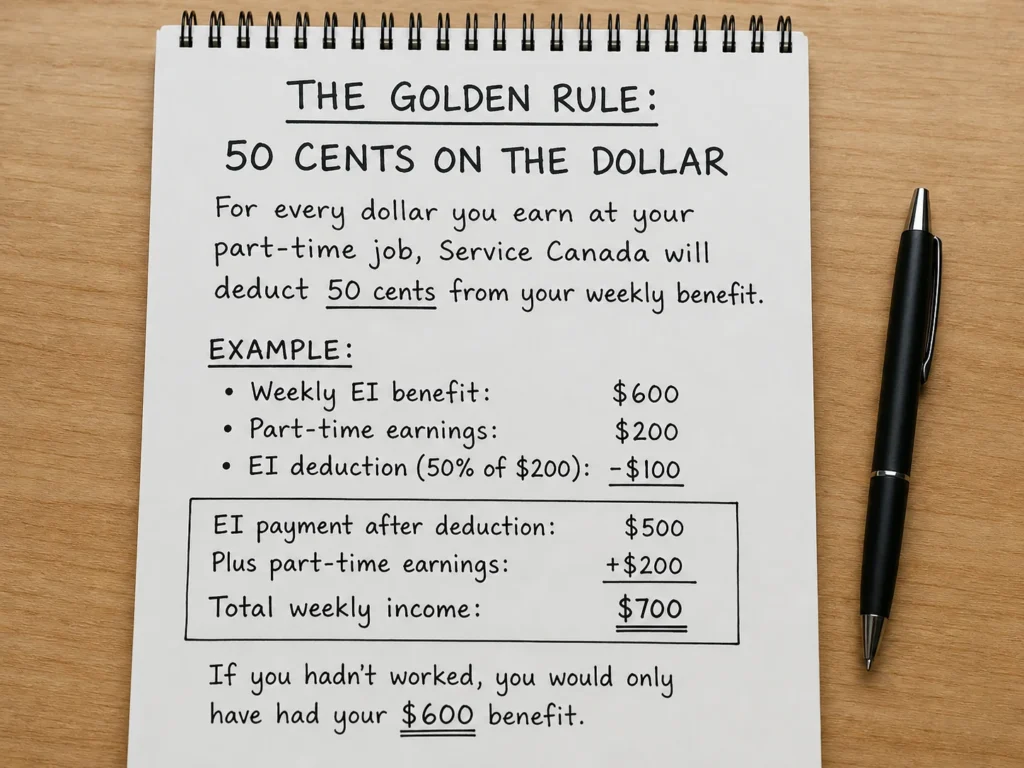
The most important thing to remember when working while on EI is the 50% rule. For every dollar you earn at your part-time job, Service Canada will deduct 50 cents from your weekly benefit.
Example: If your weekly EI benefit is $600 and you earn $200 at a part-time job, they will deduct $100 (half of your earnings) from your payment. You’ll receive $500 from EI plus your $200 from work, totaling $700. If you hadn’t worked, you would only have had your $600 benefit.
Related: Canada EI Benefits 2026: Who Qualifies, Unlock Up to $729/Week
2. The 90% “Earnings Cap”
There is a limit to how much you can earn before the deductions get steeper. This is known as the 90% cap.
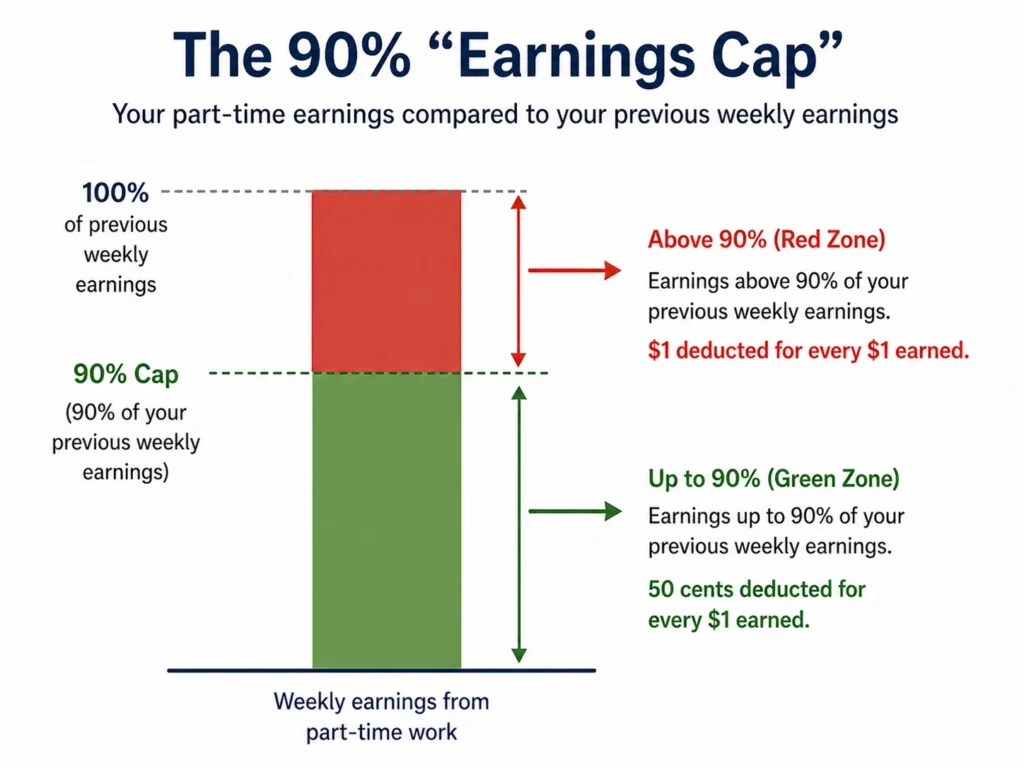
Service Canada looks at the weekly earnings they used to calculate your initial claim. If your part-time earnings exceed 90% of that previous amount, they stop the 50-cent rule and start deducting dollar-for-dollar for everything above that cap.
3. Working Full-Time Changes Everything
It’s important to note that these rules are strictly for part-time work. If you work a full work week (usually 35 hours or more), you are generally considered “employed” for that week. In this case, you usually won’t receive any EI benefits for that specific week, regardless of how much you earned.
4. Don’t Forget to Report Your Earnings!
To keep your claim active and legal, you must stay on top of your Bi-Weekly Reports through the official Service Canada portal.
- Report when you earn it: You must report your gross earnings (before taxes) for the week you worked the hours, not the week you actually received the paycheck.
- Keep a log: Keep track of your hours and employers in case Service Canada asks for clarification later. For more help tracking your finances during this time, check out our guide to budgeting between jobs.
5. Does Working While on EI Shorten Your Claim
One of the best perks of working while on EI is that it doesn’t “use up” your benefit weeks faster. In fact, because you are receiving partial payments, you might be able to extend the duration of your claim over a longer calendar period until your total entitlement is paid out.
The Bottom Line
The rules surrounding working while on EI are a win-win. They allow you to stay connected to the workforce, gain experience, and bring in extra income without losing the safety net of Employment Insurance. Just be honest on your reports, and you’ll find that a little extra work goes a long way.
Frequently Asked Questions
What is an EI in Canada?
Employment Insurance (EI) in Canada is a federal program providing temporary financial assistance to workers who lose their jobs, or cannot work due to illness, pregnancy, caring for a newborn, or supporting a critically ill family member. Funded by worker premiums, it offers regular, sickness, and special benefits.
Can I work while on EI Canada?
If you earn money while receiving EI benefits, you can keep 50 cents of your benefits for every dollar you earn, up to 90% of your previous weekly earnings.